Here are a couple of entries from our first winter at the lake after buying the cottage in September.
Entry 5: The Initial Bivouac and the Winter Ritual
We spent every fall weekend at the cottage. We personalized it. We swapped some furniture. A sleeper sofa with a Native American design was a key purchase. It faced the fireplace. We could sit together. The cottage had a well pump and a gas heater. We did not trust them. Technology failed in remote areas. We reverted to fire.
The fireplace was central. Red brick with a mantle. Paneling was glued to the chimney. Blowers pumped heat into the room.
We replaced the seller’s bear skin above the mantle with a Terry Redlin print—“Hunters Haven.” It fit the decor. Redlin always showed the warm glow of fire.
The fireplace was open. It needed a screen. It would contain sparks and manage the draw. This was the first “TO DO.” A brass, glass, and chain screen was acquired and affixed to the hearth.
The brick fireplace drew poorly. I smoked us out with the first fire. Opening the flue was a must. It would not happen again.
Starting a fire became customary in fall, winter, or early spring. The crackling wood created a cozy feeling. Returning from the lake or ice, the smoke and the glow through the window was a welcome sight.
We gathered bundles of twigs and pine cones dipped in wax. They were excellent fire starters. Sunday newspapers helped warm the chimney quickly.
In winter, fire was primary heat. Burning all day, the brick warmed and retained heat. The furnace rarely came on.
I cut and split much of the firewood. My dad said a wood-based fire warms you four times: when you cut it, split it, stack it, and burn it. There was satisfaction.
A black leather chair stayed by the fireplace. It became my “SPOT.” I would sit and read. The dogs were at my feet.
The pipes could freeze. We avoided indoor plumbing. We drained the pipes and winterized the cabin. We paid the physical tax instead.
This was the Ice Tax Ritual. I walked to the lake. I chopped the ice with the axe. The dark water steamed in the cold. I hauled the heavy buckets up the hill. The water was for flushing only. It was an honest trade. Hauling the water was everything.
On one of the first trips, Katie and I scooped water. A small fish was on the ice. A minnow with a long dorsal fin and a spot on its tail. It was a bowfin (dog fish). We rescued it. We put it in a jar. “Spot” was a family pet for a few years until he was released into a lake. He was a constant reminder of the lake. He was the first of many wildlife experiences. Finally, we released him to a large lake.
***
Entry 6: The Winter of Small Wonders
The first winter was less about the hammer. It was more about the landscape. We were learning how to live in the place. The land had a personality. The Ice Tax Ritual continued. It was the backdrop for exploration.
The woods, a green wall in summer, opened under the snow. We snowshoed the 80 acres. We learned the deer trails. We found the hidden ponds.
We started a simple aesthetic project: feeding the birds. We built simple wooden feeders that hung between two Hemlock trees. The trees provided the birds a perch and protection from the elements. Also hanging the feeder between the trees discouraged the squirrels a bit, but they are ingenious little devils. We filled the feeders each weekend and when we returned the following week, they would be empty. Cardinals, chickadees, and nuthatches against the white backdrop welcomed the free handout, and sunflower seeds were high cuisine for them.
These were small victories. A bird fed. After a time, Katie and I would sit out on the deck with sunflower seeds in our gloved hands. The Chickadees were the most curious and brave. After a time one little bandit took a seed from our hands. He returned again, and shortly after that his buddies joined him. Katie was beginning to experience the wonders of Nature. There would be many more rich experiences over the years. We even installed a clear window feeder right on the glass, giving us an up-close, high-definition view of these tiny personalities, especially our favorite little “bandit” Chickadee, snatching a seed and flying off.
***
Entry 7: Fury Hill
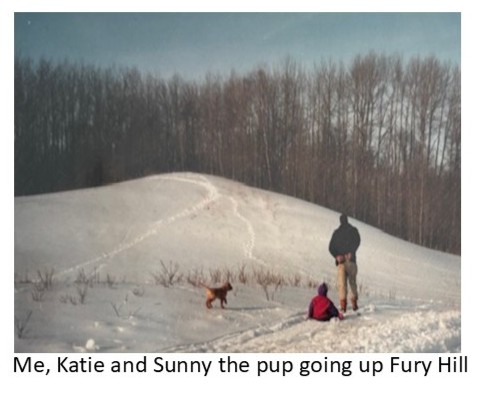
Our first Winter at the lake we were introduced to “Fury Hill.” It was a slope the lake kids (now grown) had sledded over the years. It was the kind of hill where a fast run, a plastic saucer, and a little bit of bad judgment made for the best day of your life. It was reached by following a path through the 80-acre woods. It was a long steep slope. One winter day we had a once-every-10-year weather event. Overnight a rain that covered deep snow—followed by a flash freeze. The result was an ice coating on the snow strong enough to hold our weight. Perfect for sledding/sliding.
So, with snow saucer in hand and pulling Katie on a small plastic toboggan, we trudged to the hill. Katie was little, 5 years old. We had just gotten a new puppy. Sunny was a Golden Retriever and joined us. She was just a pup.
Once we got to the hill, we discovered climbing it on the ice crust was a challenge. Sunny with her claws could scamper up the hill. But Katie and Barb could not ascend the slippery slope. I had to break trail through the crust to form a path.
Once at the top, our first trip down was Katie. She started down on the ice crust and continued to gain speed. The 100-yard descent happened rapidly, Katie howling with delight as she sped down. Barb and I were TERRIFIED. Today we would be considered irresponsible parents. But this sledding event was tame compared to what Barb and I experienced in our youth in the late 50’s and 60’s. We quickly decided a slower descent was the wise choice.
Over the years Fury Hill provided a lot of winter fun, but we never again experienced the ice crust of our first trip. It was a once-in-a-lifetime event for us all. Sadly, as the years went by the property was sold and a home built at the base. Fury Hill was a victim of progress. Like so many other things it is now a memory of the past, a victim of time. But the memories remain etched in our mind.
***

 The Necessity of a Place- 30 years at the Water’s Edge